
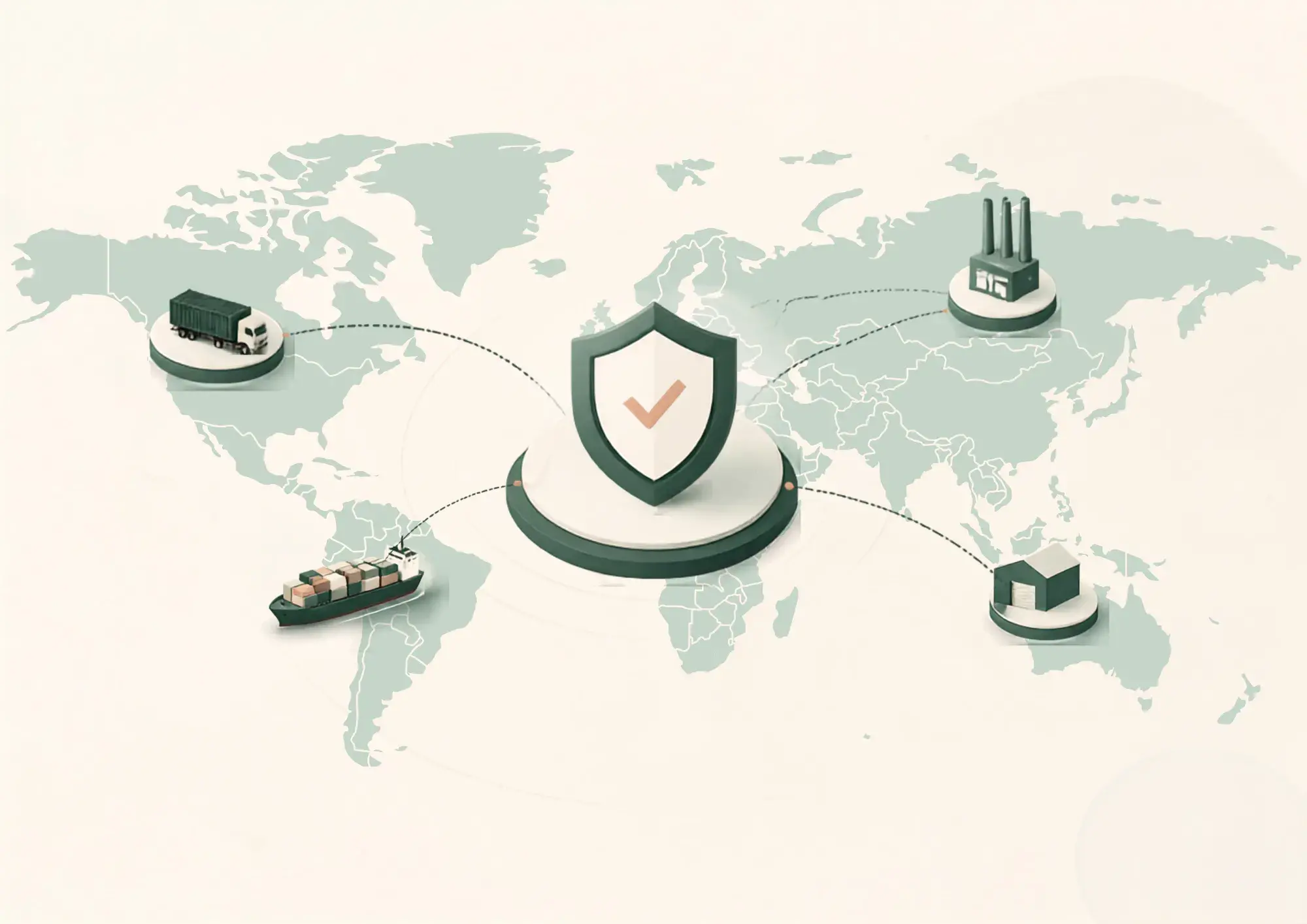
Introduction: Why Your Supply Chain Is Only as Strong as Its Weakest Link
Modern businesses depend on an extensive network of suppliers, vendors, logistics providers, contractors, and service partners to operate efficiently and remain competitive. While these relationships create opportunities for growth and innovation, they also introduce hidden risks that can disrupt operations, damage reputations, and trigger regulatory scrutiny. As supply chains become increasingly global and interconnected, businesses must look beyond their direct operations and gain visibility into the risks that exist across their partner ecosystem. This makes supply chain due diligence a critical component of risk management, helping organizations identify, assess, and mitigate potential threats before they impact business performance.
What Is Supply Chain Due Diligence?
Supply chain due diligence is the process of evaluating and monitoring suppliers, vendors, contractors, distributors, and other third parties to identify potential risks that could affect an organization's operations, reputation, regulatory compliance, or financial stability. It involves assessing factors such as legal standing, ownership structures, financial health, compliance practices, sanctions exposure, ESG performance, cybersecurity controls, and adverse media.
Supply Chain Due Diligence vs Standard Vendor Onboarding
While standard vendor onboarding typically focuses on operational requirements such as registration documents, contracts, tax details, certifications, and payment information, supply chain due diligence takes a broader and more risk-focused approach. It goes beyond verifying whether a supplier can provide a product or service and examines whether the supplier could expose the organization to regulatory, financial, reputation, or operational risks.
Why Supply Chains Have Become a Primary Risk Vector
Globalization, digital transformation, and increasingly interconnected business ecosystems have made supply chains one of the most significant sources of organizational risk. Businesses often depend on multiple layers of suppliers operating across different jurisdictions, each subject to varying regulatory, legal, and ethical standards. A single third party involved in fraud, corruption, sanctions violations, poor cybersecurity practices, or labour misconduct can create serious consequences for the organizations connected to it.
Hidden Risks Lurking Within Modern Supply Chains
Modern supply chains often span multiple countries, suppliers, distributors, and service providers, creating layers of complexity that can conceal significant risks. While an organization may conduct due diligence on its direct vendors, hidden vulnerabilities frequently exist deeper within the supply chain, making it difficult to identify potential threats before they impact operations. Understanding these hidden threats is essential for building a resilient and responsible supply chain.
Forced Labor and Human Rights Violations
Human rights violations remain a major concern in global supply chains, particularly in industries that rely on low-cost labor across multiple jurisdictions. If such violations are uncovered, companies can face legal action, negative media attention, investor scrutiny, and significant reputation harm. Effective supply chain due diligence helps organizations identify potential labor-related risks, assess supplier practices, and demonstrate their commitment to ethical sourcing.
Sanctioned Entities and Shell Suppliers
A supplier that appears legitimate on the surface may have undisclosed links to sanctioned individuals, restricted organizations, or shell companies designed to conceal beneficial ownership. Engaging with such entities can expose businesses to regulatory violations, financial penalties, and compliance risks, particularly in sectors subject to strict AML, KYC, and sanctions regulations. Comprehensive due diligence enables organizations to uncover hidden relationships and reduce the risk of inadvertently conducting business with prohibited parties.
Financial Instability Among Sub-Contractors
Many businesses focus their assessments on primary suppliers while overlooking the financial health of subcontractors and downstream vendors. However, financial distress at any level of the supply chain can lead to delayed deliveries, service interruptions, quality issues, or complete operational failure. Suppliers facing cash flow challenges, mounting debt, or insolvency may struggle to meet contractual obligations, creating unexpected disruptions. Evaluating financial stability and continuously monitoring critical vendors can help organizations anticipate risks and strengthen business continuity.
Environmental and ESG Non-Compliance
Environmental, Social, and Governance (ESG) considerations have become increasingly important for regulators, investors, customers, and business partners. Suppliers that fail to comply with environmental regulations, sustainability commitments, waste management requirements, or ethical business standards can expose organizations to reputation and regulatory risks. As stakeholders demand greater transparency and accountability, businesses must evaluate ESG practices across their supply chains and ensure that suppliers align with their sustainability and corporate responsibility objectives.
Counterfeit Goods and Grey Market Sourcing
Counterfeit products and unauthorized sourcing practices can undermine product quality, damage customer trust, and create significant legal liabilities. In complex supply chains, suppliers may source components or materials from unverified channels to reduce costs, introducing counterfeit, substandard, or illegally acquired goods into the production process. Such practices can compromise product integrity, increase safety risks, and lead to contractual disputes or regulatory action. Thorough supplier verification and continuous monitoring, help organizations maintain supply chain integrity and protect their brand reputation.
Why Businesses Can No Longer Ignore Supply Chain Risk
Failure to identify and manage supply chain risks can lead to legal liabilities, financial losses, reputation damage, and significant disruptions to business continuity. As a result, proactive supply chain due diligence has become essential for organizations seeking to build resilience and maintain stakeholder trust.
Regulatory Pressure: ESG Disclosures and Import Regulations
Governments and regulatory authorities worldwide are introducing stricter requirements related to supply chain transparency, sustainability, human rights, and responsible sourcing. Many organizations are now required to disclose ESG-related risks, assess supplier practices, and demonstrate efforts to prevent issues such as forced labor, environmental violations, and corruption within their supply chains. Import regulations in several jurisdictions are also becoming more stringent, with greater scrutiny of the origin, production methods, and ethical standards associated with goods entering the market. Businesses that fail to meet these expectations may face regulatory investigations, penalties, restricted market access, and increased compliance obligations.
Reputation Fallout from Supplier Misconduct
Allegations involving labor exploitation, environmental damage, fraud, corruption, or unethical business practices often attract media attention and stakeholder concern, regardless of whether the misconduct was committed directly by the company or by one of its suppliers. Customers, investors, and business partners increasingly expect organizations to demonstrate accountability across their supply chains. Robust due diligence helps businesses identify potential red flags early and reduce the risk of being associated with suppliers whose actions could undermine brand reputation and stakeholder confidence.
Operational Disruption from Undisclosed Sub-Contracting
Many supply chain disruptions originate from entities that are not part of an organization's direct supplier network. Suppliers may rely on subcontractors or secondary vendors without fully disclosing these relationships, creating blind spots that can expose businesses to unexpected risks. Supply chain due diligence helps organizations gain greater visibility into supplier ecosystems, enabling them to identify dependencies and strengthen operational resilience before disruptions occur.
How Supply Chain Due Diligence Works: A Step-by-Step Process
Effective supply chain due diligence goes beyond collecting supplier documents during onboarding. It is a structured and ongoing process designed to provide visibility into supplier operations, ownership structures, compliance practices, financial stability, and potential reputation risks.
Step 1: Mapping the Full Supplier and Sub-Supplier Network
The first step in supply chain due diligence is gaining a clear understanding of the entire supplier ecosystem. Many organizations have visibility into their direct suppliers but limited insight into subcontractors, manufacturers, distributors, or other third parties that support the delivery of goods and services. Mapping these relationships helps businesses identify critical dependencies, uncover hidden links within the supply chain, and understand where potential risks may exist.
Step 2: Risk Tiering and Prioritization
Not all suppliers pose the same level of risk. Organizations should classify suppliers based on factors such as geographic location, industry sector, access to sensitive information, regulatory exposure, business criticality, and transaction value. Suppliers operating in high-risk jurisdictions or industries may require enhanced scrutiny compared to low-risk vendors providing non-critical services. Risk tiering enables organizations to allocate resources efficiently and focus due diligence efforts on suppliers that present the greatest potential exposure.
Step 3: Corporate, Financial and Ownership Verification
Ownership verification is particularly important as it helps identify undisclosed stakeholders, shell companies, conflicts of interest, or links to politically exposed persons and sanctioned entities. This step ensures that organizations understand who they are engaging with and any risks associated with those relationships.
Step 4: On-the-Ground and Discreet Enquiries
On-the-ground and discreet enquiries can help uncover issues such as operational weaknesses, labor concerns, unethical business practices, undisclosed litigation, or reputation red flags that may not be visible through public records. Independent verification provides a more accurate picture of a supplier's actual business practices and risk profile.
Step 5: Continuous Monitoring and Periodic Re-Assessment
Continuous monitoring allows organizations to track adverse media, litigation developments, sanctions updates, regulatory actions, ESG concerns, and significant corporate changes. Periodic reassessments ensure that supplier risk profiles remain current and that emerging issues are identified and addressed before they impact business operations. Consistent monitoring transforms due diligence from a one-time compliance exercise into an ongoing risk management strategy.
Supply Chain Compliance Consulting: Building a Sustainable Framework
As supply chains become more complex and regulatory expectations continue to evolve, organizations need more than periodic supplier checks to manage third-party risk effectively. Supply chain compliance consulting helps businesses design and implement structured frameworks that integrate risk management, regulatory compliance, ethical sourcing, ESG considerations, and ongoing supplier oversight into their operations.
A sustainable compliance framework begins with clear governance structures that define how suppliers are assessed, approved, monitored, and escalated. Compliance consultants help organizations develop supplier risk classification models, due diligence procedures, approval workflows, and reporting mechanisms tailored to their industry and risk exposure. This ensures that high-risk suppliers receive the appropriate level of scrutiny while maintaining operational efficiency across the broader supplier ecosystem.
Industries Where Supply Chain Due Diligence Is Most Critical
While every organization can benefit from stronger third-party risk management, certain industries face significantly higher exposure to supply chain risks due to regulatory requirements, global sourcing networks, complex vendor ecosystems, and heightened stakeholder scrutiny. For these sectors, supply chain due diligence is not merely a compliance exercise but a critical component of operational resilience, reputation management, and business continuity.
Manufacturing and Industrial Operations: Manufacturing companies often depend on extensive networks of suppliers, distributors, logistics providers, and contract manufacturers spread across multiple jurisdictions.
Pharmaceuticals and Healthcare: The pharmaceutical and healthcare sectors operate within highly regulated environments where supply chain transparency is essential.
Financial Services and Fintech: Banks, insurance companies, fintech firms, and other financial institutions rely on numerous third-party vendors for technology services, customer onboarding, compliance operations, data management, and business process outsourcing.
Government Contractors and Defence: Organizations involved in government projects and defence supply chains are subject to stringent security, compliance, and procurement requirements.
Infrastructure and Construction: Large infrastructure and construction projects often involve multiple contractors, subcontractors, material suppliers, and consultants.
Choosing the Right Supply Chain Risk Consulting Partner
Selecting the right supply chain risk consulting partner is a critical decision that can significantly influence an organization's ability to identify, assess, and mitigate third-party risks. The right partner can help organizations strengthen compliance, improve operational resilience, and make informed decisions across their supplier ecosystem. Beyond conducting initial due diligence, the consultant should be able to assess ownership structures, financial stability, compliance practices, ESG performance, sanctions exposure, and reputation concerns while providing ongoing monitoring and advisory support.
A risk-based and tailored approach is particularly important, ensuring that due diligence efforts align with the organization's industry, geographic footprint, and risk profile. By partnering with an experienced supply chain risk consultant, businesses can gain greater visibility into their supplier ecosystem, enhance operational resilience, reduce compliance exposure, and build a more secure and sustainable supply chain.
Conclusion: Turning Supply Chain Visibility into Competitive Advantage
In an increasingly interconnected and risk-driven business environment, supply chain due diligence has become far more than a compliance requirement. Organizations that develop deep visibility into their supplier and sub-supplier networks are better positioned to identify emerging risks, strengthen regulatory compliance, prevent disruptions, and protect their reputation. This enhanced visibility not only improves resilience and stakeholder confidence but also creates a competitive advantage by enabling faster decision-making, more reliable operations, and stronger business partnerships. Organizations that invest in comprehensive supply chain due diligence will be better equipped to build sustainable, transparent, and future-ready supply chains.